Guide to Common Health Screenings by Age
Most of us know that the key to a long, healthy life is prevention. Part of preventing disease involves a combination of healthy habits (diet, exercise, rest, etc.) and visiting your primary care physician for routine health screenings.
Many illnesses can be treated much more effectively if they are detected early. For this reason, you should do your best to complete screenings suggested by your PCP at regular intervals. To help you stay on track, we have created a guide to some of the more common health screenings by age. (Remember that the exact age for the tests and their frequency will be based on your personal history and your doctor’s recommendation.)
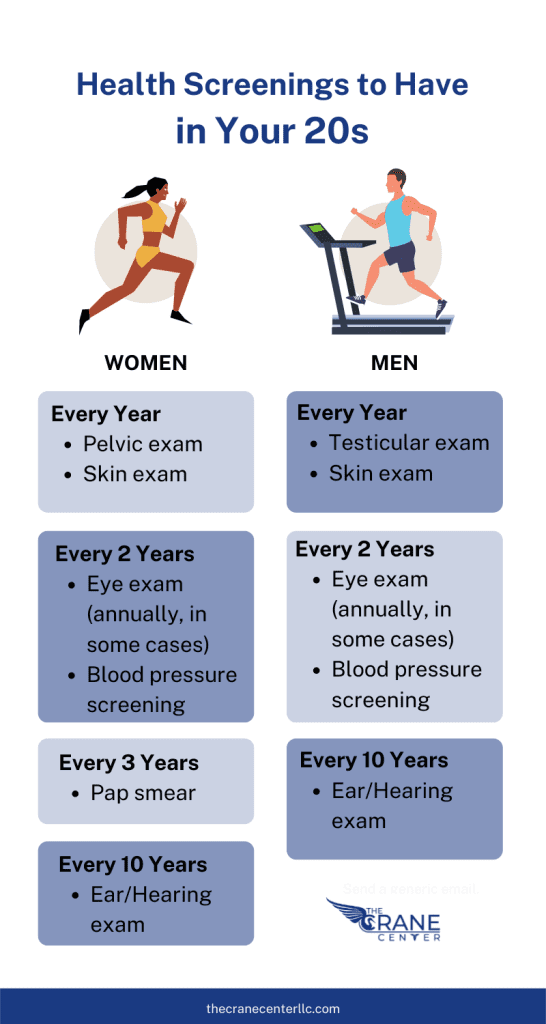 Yes, even in your 20s, you should be working with your primary care doctor to monitor for certain diseases. Twenty-somethings are not immune to illness, including high blood pressure and certain types of cancers.
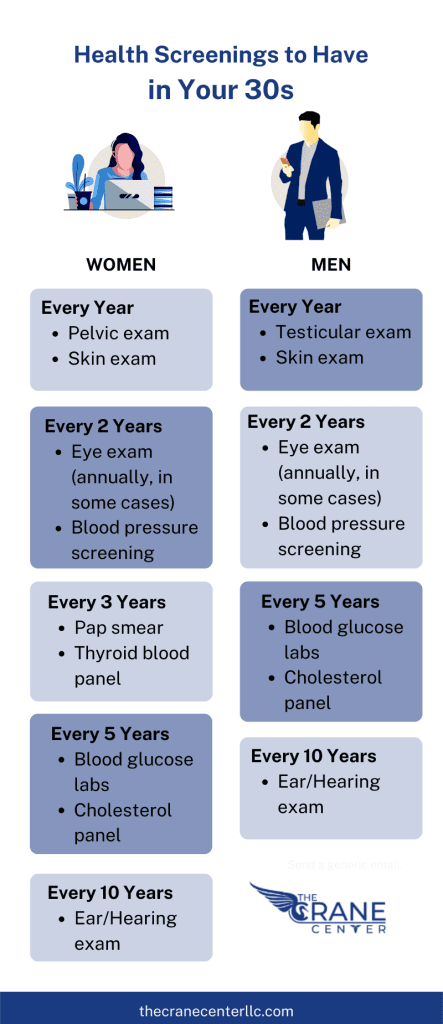 Between the ages of 30 and 39, you will add a few more routine screenings to your checklist. At this stage of life, for example, you will be monitored for early signs of diabetes and high cholesterol. You will keep the same routine screenings and their frequency and add the following to your schedule:
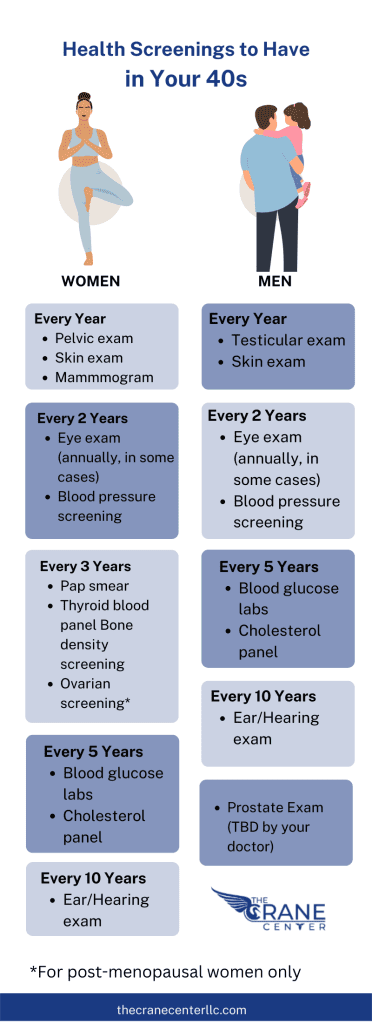 In addition to the screenings you were receiving in your thirties, you will now be monitored for additional diseases of the male and female reproductive system. You will continue your screenings schedule and frequency from when you were in your thirties, and your doctor may add the following:
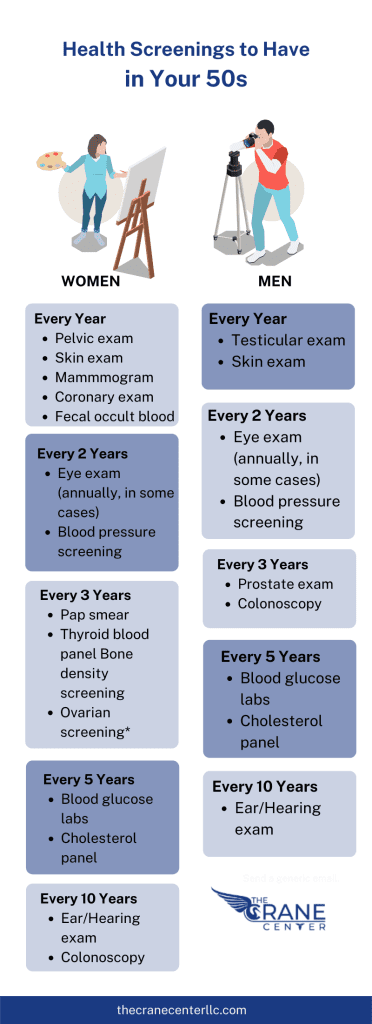 50-year-olds can expect additional testing every year or every few years. Your primary care doctor will likely suggest screenings for heart disease and colorectal diseases.
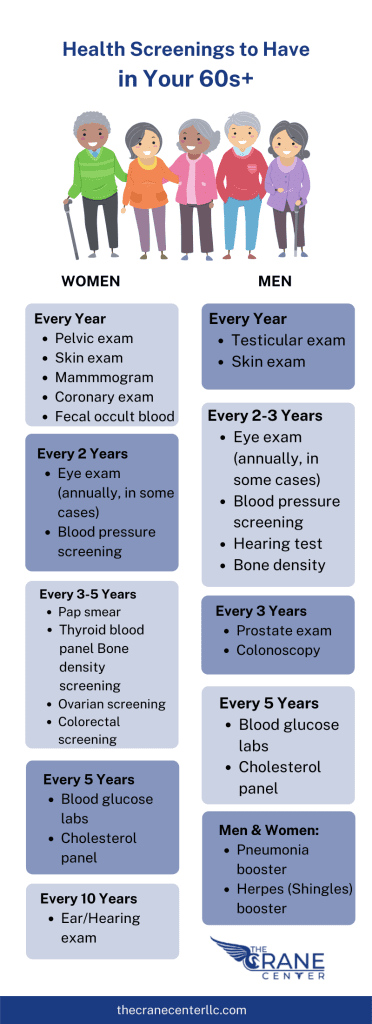 From age 60 onwards, certain types of screenings may become more frequent. Your doctor may also recommend the following:
Health Screenings to Complete in Your 20s
If you're dealing with rushed appointments and a doctor who never has time for your real questions — we solve with concierge primary care with Dr. Tuel, built on actual access.
Text (844) 909-4156 →
Yes, even in your 20s, you should be working with your primary care doctor to monitor for certain diseases. Twenty-somethings are not immune to illness, including high blood pressure and certain types of cancers.
Women
Annually- Pelvic exam (this is different from a Pap test, which is specifically to rule out cervical cancer. Pap tests do not evaluate for other female reproductive illnesses, such as uterine fibroids or ovarian cancer).
- Skin exam
- Eye exam (your doctor may recommend this annually, in some cases)
- Blood pressure screening
- Pap smear
- Ear/Hearing exam
Men
Annually- Testicular exam
- Skin exam
- Eye exam (your doctor may recommend this annually, in some cases)
- Blood pressure screening
- Hearing Exam
Health Screenings to Complete in Your 30s
Between the ages of 30 and 39, you will add a few more routine screenings to your checklist. At this stage of life, for example, you will be monitored for early signs of diabetes and high cholesterol. You will keep the same routine screenings and their frequency and add the following to your schedule:
Women
Every 3 Years- Thyroid blood panel
- Blood glucose labs
- Cholesterol panel
Men
Every 5 Years- Blood glucose labs
- Cholesterol panel
Routine Screenings for Patients in Their 40s
In addition to the screenings you were receiving in your thirties, you will now be monitored for additional diseases of the male and female reproductive system. You will continue your screenings schedule and frequency from when you were in your thirties, and your doctor may add the following:
Women
Annually- Mammogram
- Bone density screening
- Ovarian screening (for post-menopausal women only)
Men
- Prostate exam (this will be at the discretion of your doctor and based on any history that suggests you are high risk for prostate cancer)
Common Health Exams in Your 50s
50-year-olds can expect additional testing every year or every few years. Your primary care doctor will likely suggest screenings for heart disease and colorectal diseases.
Women
Annually- Coronary screening
- Fecal occult blood test (detects early signs of colon cancer)
- Colonoscopy
Men
Every 3 Years- Prostate exam
- Colonoscopy
Health Screenings in Your 60s
From age 60 onwards, certain types of screenings may become more frequent. Your doctor may also recommend the following:
Women
Every 3-5 Years- Colorectal screening
- Pneumonia and herpes vaccine boosters
Men
Every 2-3 Years- Hearing test
- Bone density test
- Pneumonia and herpes vaccine boosters